A return address in Canada for sellers shipping from China.
For sellers on Amazon.ca, AliExpress, Alibaba, Walmart.ca, Newegg.ca, Best Buy Marketplace, eBay, TikTok Shop, and their own stores whose Canadian customers are told to ship returns back to China, or to a US address that is just as far across a border.
SINCE 1994 MARKHAM, ONTARIO ELECTRONICS REPAIR DEPTH
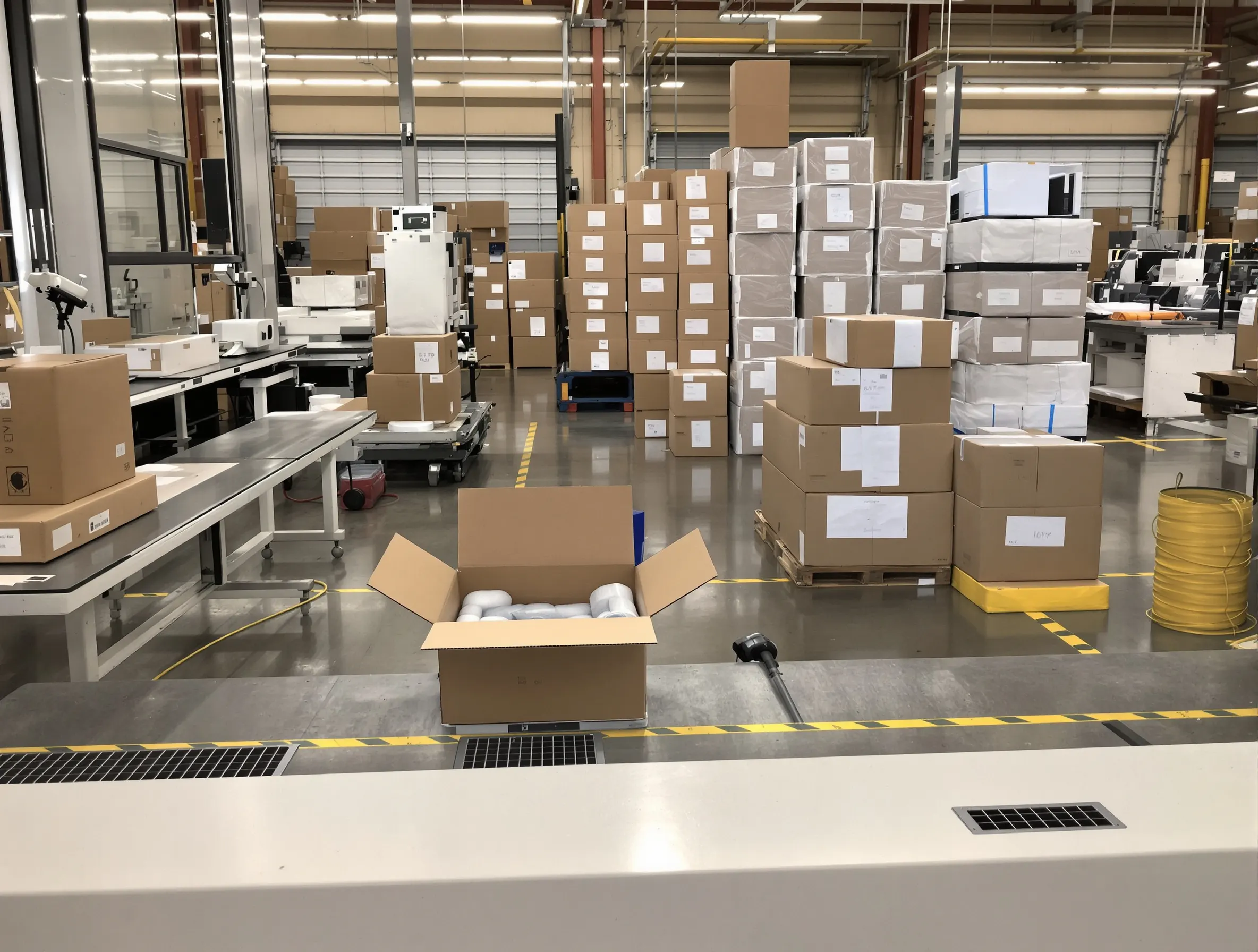
What a Canadian return point is, and why a US address does not count
A Canadian return point is an address in Canada that your Canadian customers send returns to as a domestic parcel. Here it is a depot in Markham, Ontario that receives every return, verifies it against the order, reports it to you by serial, and routes each unit to its best next use.
The border is the whole point. A return to China or to a US address is an international shipment for a Canadian customer: customs forms, cross-border postage, and a long wait for the refund. To that customer it makes no difference whether the label says Shenzhen or New Jersey. Only an address in Canada keeps the return domestic.
Why a local return address helps you sell in Canada
Free local returns are a differentiator for a seller shipping from overseas, and the case for them rests on three things you can check against your own numbers.
Conversion on higher-value goods
A Canadian shopper looking at a CAD 150 electronics item from an overseas seller asks one question before checkout: what if it has to go back? A local return address removes the biggest reason to hesitate.
Platform rules you have to answer
Amazon gives sellers shipping from outside the country two calendar days to answer a return request with a returnless refund, a domestic return address, or a prepaid international label. Miss it and Amazon may refund the customer and charge you. A Canadian address is the option that gets the unit back.
Refund fraud and empty-box returns
A returnless refund pays every claim, honest or not. Verified intake with photos and serials means you refund what actually came back, and an empty box is caught at the bench instead of in your margin.
How returns fraud works in CanadaThe border math: three places a Canadian return can go
The same returned unit, followed three ways. Only one of them keeps the return inside the country where it was sold, and where it can be sold again.
| Question | Return to China | Return to a US address | Return to Markham |
|---|---|---|---|
| What the customer does | A trip to the post office, a customs declaration, and international postage that is often more than the item is worth. | An international shipment from Canada: customs paperwork and cross-border postage. | Drops off a domestic parcel, like any other Canadian return. |
| Customs | An export from Canada and an import into China. Sending the unit back to Canada later makes it dutiable and taxable above CAD 20. | A customs entry, possible duties, brokerage, and days in transit, in both directions if the unit comes back to Canada. | None. The parcel never leaves Canada. |
| Time to a refund decision | Weeks in transit before anyone can inspect the unit. | Border time on top of transit, before anyone can inspect the unit. | Domestic transit, then inspection at intake. |
| What you get back | The unit, weeks later, on the other side of the Pacific from the market it was sold in. | The unit, in a US warehouse, outside the market it was sold in. | The unit, verified against the order, photographed, graded, and visible by serial. |
| Reselling it in Canada again | A new export, and Canadian duties and taxes when it comes back in. | Another crossing north, with its own entry, brokerage, and possible duties. | Ships to the next Canadian customer from Markham, or sells through a Canada-only refurbished channel. |
A US return point solves returns from US customers. For a Canadian customer it is just a different border, with its own customs entry, brokerage, and transit days, and the same again if the unit ever comes back north to be sold. A Canadian address is the only one that takes the border out of the return.
How the Canadian return address service works
Six steps from the first return request to a report on every unit. Your customers see a domestic return; you see each unit by serial.
- STEP 01
We become your return address
You set the Markham address as your Canadian return address in Seller Central, AliExpress, Walmart.ca, or your own store’s return policy. Your customers ship a domestic parcel.
- STEP 02
Intake, unit by unit
Every unit is checked against your order or RMA reference, its serial recorded, photographed, and its condition noted. It is visible in the portal, and through the REST API, from the first scan.
- STEP 03
Test and grade
Functional testing and screening separate no-fault-found units from real failures, then each unit gets a cosmetic and functional grade against criteria agreed per product.
- STEP 04
Route by your rules
Each unit takes the path your rules assign: restock, relabel, refurbish, repair, resell, harvest, sell to us, or recycle. Your team can override any unit in the portal.
- STEP 05
Fulfil from Canada
Resellable units ship to your next Canadian customer from Markham, so a return becomes the next sale without a second ocean crossing.
- STEP 06
Report, and return to origin if you want
Per-unit history by serial, monthly roll-ups, and a consolidated pallet back to origin when you want stock home: one shipment, not hundreds of parcels.
Onboarding needs a product list, your expected monthly return volume, and your platform mix. It does not need a Canadian company or a lease. Bench detail: screening and testing, refurbishment and grading, board-level repair.
Want to know what your Canadian returns are worth? Send us your SKU list.
The six things cross-border sellers ask first
These decide whether a Canadian return point makes sense for you. Each one has an operational answer, not a sales one.
“Our Canadian volume is small”
That is the usual starting point, and the reason to use a shared return point instead of your own. Receiving, test benches, and reporting already run here for other programs, so small Canadian volume does not need its own lease or staff.
“We already use a US 3PL”
Keep it for US orders. A US address solves returns from US customers, but for a Canadian customer it is still an international shipment. Canadian returns can come to Markham while US returns stay exactly where they are.
“Our items are low value, we just refund”
Below some price a returnless refund is the right call, and that line is yours to draw. Above it, a refund without the unit gives away stock you could have sold again, and pays an empty-box claim in full.
“We don’t have a Canadian company or bank account”
You do not need one to use a Canadian return address. The address is ours, the returns are processed for you, and invoicing is in CAD or USD.
“Our products are not electronics”
Electronics and hardware are what these benches are built for, so that is where we are the right fit. For adjacent categories such as small appliances or e-mobility electronics, ask us, and we will tell you honestly whether we can test and grade them.
“How do we talk to you?”
Through the form on this page, in English or in Chinese. We reply in English, and written replies in Chinese are available on request. Phone hours are Monday to Friday, 8:30 to 17:00 Eastern time.
The depot behind the address
Microland has repaired electronics in Canada since 1994, from one facility in Markham, Ontario. Manufacturers already put their warranty work through these benches, and returns from your Canadian customers go through the same intake, test, and QA discipline.
- Sony
- Yamaha
- QSC and Q-SYS
- Onkyo and Pioneer
- Rotel and Monitor Audio
- Cambridge Audio
In-warranty and out-of-warranty repair for each of these brands is handled in Markham, with genuine parts, under the manufacturer’s terms. Across every category we serve, Microland is an authorized service centre for more than 100 brands.
Set up a Canadian return point
Tell us which platforms you sell on, your product categories, roughly how many Canadian returns you see a month, and where those returns go today. We will come back with how a return point in Markham would run for you.
Questions about a return address in Canada for international sellers
What is a local return address in Canada?
A local return address in Canada is a Canadian address your Canadian customers ship returns to as a domestic parcel. At Microland it is a depot in Markham, Ontario that receives each return, checks it against the order, records the serial and condition, and routes the unit to its best next use: restock, refurbishment, repair, resale, parts, or recycling.
Why is a US return address not enough for Canadian customers?
Because for a Canadian customer a US address is an international shipment. The return is an export from Canada and an import into the US, with customs paperwork, cross-border postage, and transit days. Since the US ended duty-free de minimis in August 2025, the parcel also needs a US customs entry. To the customer it makes no difference whether the label says Shenzhen or New Jersey.
Do I need a Canadian company to offer local returns?
No. You do not need a Canadian company, bank account, or lease to use a Canadian return address. Onboarding needs a product list, your expected monthly return volume, and your platform mix, and invoicing is in CAD or USD.
Which platforms does this work with?
Any marketplace or store that lets you set your own return address: Amazon.ca, AliExpress, Alibaba and DHgate orders shipped to Canadian buyers, Walmart.ca, Newegg.ca, Best Buy Marketplace, eBay, TikTok Shop, and Shopify or other independent stores. It is built for marketplaces that leave returns to the seller. Where a platform runs returns itself, this does not replace that. Amazon sellers who also need FBA removal orders received, relabeled, or resold in Canada have a page of their own.
What happens to my returns once they arrive?
Each unit is checked against your order or RMA reference, serialized, photographed, and tested, then graded against criteria agreed per product. It is then routed by your rules: restock and reship, relabel, refurbish, repair, resell, harvest for parts, sell to us, or recycle. You see every unit in real time in the customer portal, or through the REST API.
Can you refurbish and resell my returns in Canada?
Yes. Units are refurbished and graded here, and those you route to resale sell through Skadi Electronics, Microland’s partner channel: a Canada-only, refurbished-only direct-to-consumer store. Every unit is graded and warrantied before it lists, price floors are set with you, and Canadian returns stay in the Canadian market.
Will you buy my returns?
We may be able to. It depends on the product, its condition, and the volume, so there is no standing price. Send us your SKU list and we will tell you whether buying your returns outright makes sense.
Can you ship orders to Canadian customers from returned stock?
Yes. Units that pass test and grading go back into stock in Markham, and we pick, pack, and ship your next Canadian orders from them. New stock you send to Canada can ship the same way, so a return becomes the next sale without crossing an ocean twice.
How do I get stock back to China?
We consolidate the units you want home into one bulk return-to-origin shipment, so stock travels back as a pallet rather than as hundreds of separate parcels. Units you do not need back can be resold, harvested, or recycled here instead.
What products do you accept?
Electronics and hardware: consumer electronics and audio/video, PC hardware and components, point-of-sale, enterprise mobility, commercial AV, print and imaging, and industrial or rugged devices. For adjacent categories such as small appliances or e-mobility electronics, ask us.