Returns screening & testing in Canada: know what’s actually broken before you spend a repair dollar.
Return streams are full of units with nothing wrong with them. Screening and testing is the gate that separates no-fault-found from real failures, so working units go back to stock and repair budgets go only where a fault exists.
Every return stream mixes genuinely failed units with units that work fine: returned for buyer’s remorse, misdiagnosis, a loose cable, or a setting. Treating them all as broken is expensive in both directions: working units eat repair labour they never needed, and real failures wait in the same queue. Screening is the triage step that sorts the stream first: each unit is functionally tested against defined criteria, and only confirmed failures move on to consume repair dollars.
Microland runs screening at its Markham, Ontario depot for return streams across Canada: RMA volume, retail returns, B-stock, and end-of-lease intake, across IT, POS, A/V, PC components, mobile, and consumer electronics. Test criteria are defined per program, so a pass means what you say it means, and each unit leaves screening with a grade and a verdict recorded by serial. Those outcomes feed the decisions that follow (restock, refurbish, resell, repair, or disposition), which is why screening is the gateway step of returns processing: everything downstream is only as good as the sort.
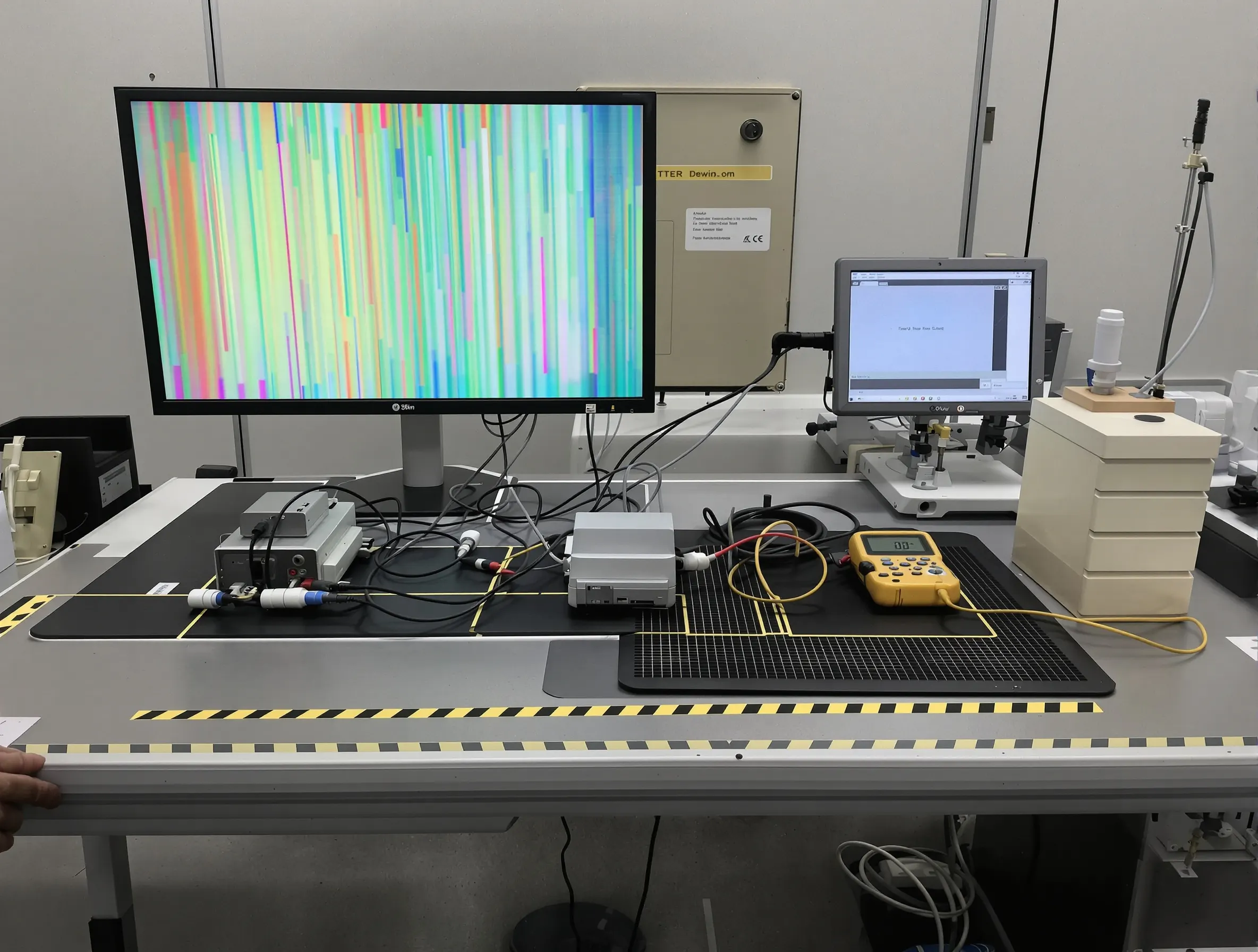
Returns screening & testing capabilities
Functional testing per program
Units are exercised against test criteria defined with you per program and per product: power, functions, ports, displays, connectivity. Pass/fail is a specification, not an opinion.
No-fault-found identification
Units that pass testing are confirmed as NFF and routed back to sellable stock or restock, instead of paying repair labour on hardware with nothing wrong.
Fault confirmation & triage
Confirmed failures are documented with symptoms and test results, then routed by your rules: to repair, to board-level rework, or straight to disposition when repair isn’t economic.
Cosmetic & functional grading
Each unit receives a grade against your grading scale, giving downstream refurbishment and resale decisions a consistent, recorded basis.
Data check & sanitization routing
Devices that arrive holding user data are flagged at screening and routed for handling following NIST SP 800-88 media-sanitization guidelines before any resale path.
Per-unit results in the portal
Every screened serial carries its test outcome, grade, and routing in the customer portal, with the REST API available to pull screening data into your own returns systems.
How returns screening runs in Canada
- STEP 01
Receive & sort
Returns arrive against your manifest or RMA records; each unit is logged by serial and enters the screening queue with its reported reason for return.
- STEP 02
Functional test
Units run the test criteria defined for your program. Results are recorded per unit: what passed, what failed, and under which conditions.
- STEP 03
Grade
Cosmetic and functional condition is assessed against your grading scale, producing the grade that refurb, restock, and resale decisions will rely on.
- STEP 04
Verdict & route
NFF units route to stock or resale; confirmed failures route to repair or disposition per your rules, with routing decisions you can review or override in the portal.
- STEP 05
Report
Screening outcomes accumulate into per-program reporting: failure rates, NFF rates, grade distribution. It’s the data that tells you what your return stream is actually made of.
Returns screening questions we get
What is returns screening, and why does it come before repair?
Screening is functional testing and triage applied to a return stream before any repair work starts. It separates units with no fault found from units with confirmed failures, so working product goes back to stock immediately and repair labour is spent only where a fault actually exists. Skipping it means paying diagnostic and repair costs on units that were never broken.
How common is no-fault-found in return streams?
Common enough to change the economics of a returns program. Returns driven by buyer’s remorse, setup problems, or misdiagnosis arrive functionally fine, and the proportion varies widely by product category and channel. That’s exactly why screening exists: rather than assume, your program’s own NFF rate shows up in the screening reports, measured against your test criteria.
Who defines the test criteria, you or us?
You do, with our help. Test criteria are set per program and per product type when the program is designed, covering what must be exercised and what constitutes a pass. That way a “pass” means the same thing to you, to us, and to whoever buys or receives the unit downstream. Criteria can be tightened or extended as the program runs.
What happens to units after screening?
Each unit routes by its verdict and your rules: NFF units go back to sellable stock or restock; confirmed failures go to repair (including board-level rework where it’s economic); and units not worth repairing route to value recovery or recycling. Grades assigned at screening drive the refurbish-versus-resell decision. Every routing is recorded per serial in the portal.
Can you screen returns for products sold across Canada?
Yes, that’s the model. Return streams consolidate to the Markham, Ontario depot from anywhere in Canada, so screening happens in-country with no cross-border shipping, brokerage, or duties on the return leg. For OEMs and distributors selling into Canada from elsewhere, it means returns get sorted and resolved without ever leaving the country.