Field services across Canada, run from the same desk as your depot program.
Installs, moves, adds, changes, and break-fix at your sites coast to coast, dispatched and managed by Microland under one contract and one SLA. When a unit can’t be fixed onsite, it moves into the depot without a second vendor, a second ticket, or a second invoice.
Some hardware can’t ship. A POS lane bolted into a checkout counter, a mounted boardroom display, a kiosk in a lobby, a rack in a back office: the fix has to travel to the device. Other hardware ships fine, and centralizing it at a depot costs a fraction of sending a technician to it. Most real programs need both, and that is usually where the vendor list starts growing: one company for onsite, another for the depot, and someone internal whose actual job becomes coordinating the two.
Microland runs both as one program. Onsite work across Canada is delivered through our national field services partner network, with Microland as the contracting party: you raise the ticket with us, we dispatch it, we manage it to resolution, and we report on it. One contract, one SLA framework, one portal, one company answering for the outcome. If the technician can’t complete the fix at the site, the unit routes to our Markham depot and continues under the same ticket, including work most field vendors have nowhere to send: component- and BGA-level board repair.
Field services are one of three partnerships that extend the depot. See how the partner network is structured, including depot and field coverage in the United States and refurbished resale through Skadi.
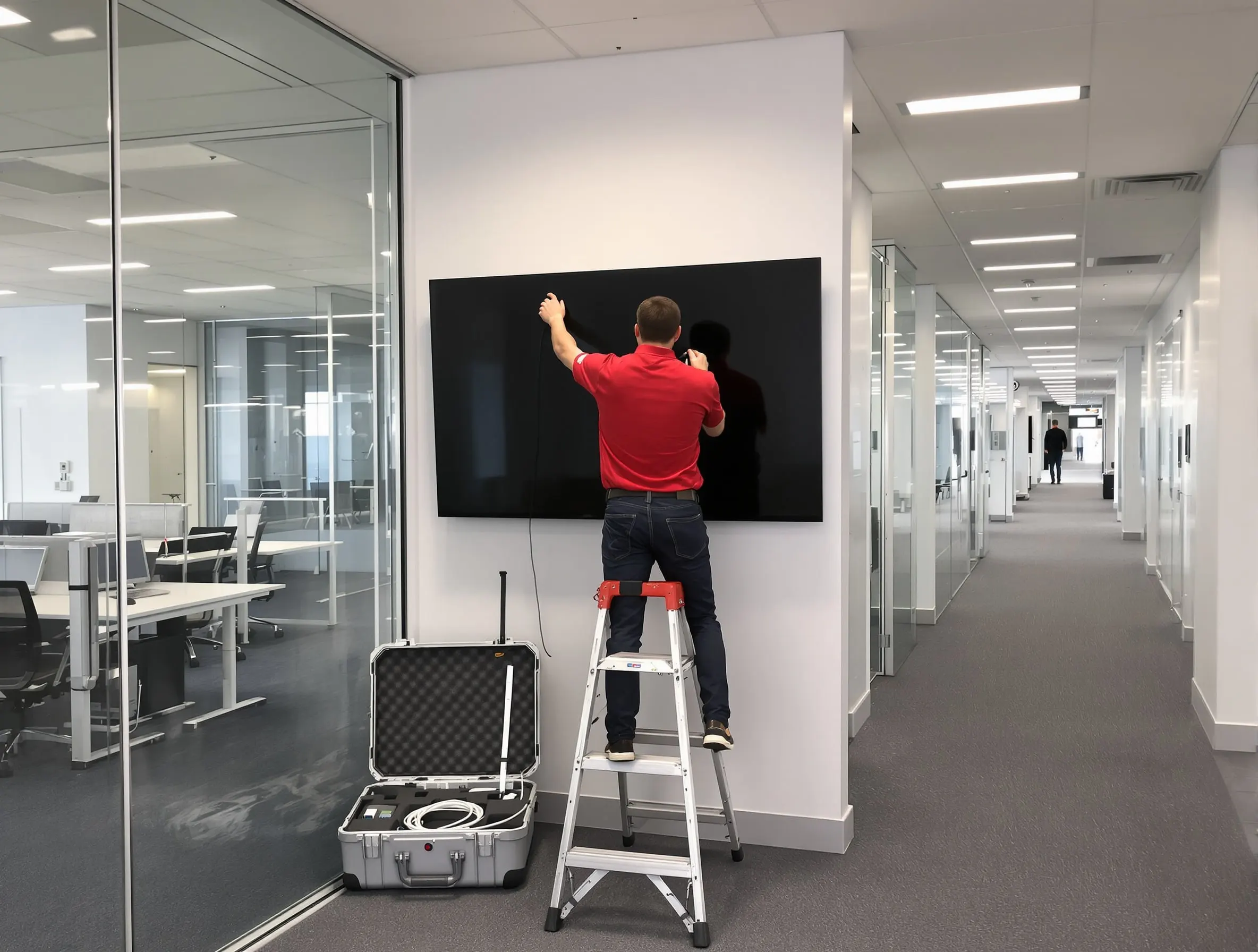
Field service capabilities across Canada
Installs, moves, adds, changes & rollouts
IMAC work at the site, from a single change to a multi-site wave: equipment installed and commissioned, relocated, reconfigured, or removed, with the outgoing fleet routed back to the depot.
Break-fix under SLA
A failure is reported, a technician is dispatched against the response window agreed for that site tier, and the call runs to resolution or to a defined escalation.
Deskside support & smart hands
Hands at the location for what a remote team can’t do: swaps, reseating, cabling, in-place reimaging, and eyes on equipment no remote console can see.
Preventative maintenance & audits
Scheduled visits for inspection, cleaning, consumable replacement, and physical asset verification, so the fleet register matches what is actually installed at each site.
Service in English and French
Technicians who work in French for Quebec sites, so a national rollout doesn’t stall at the provincial line or need a separate Quebec vendor bolted on.
Onsite-to-depot escalation
The part most field vendors don’t have. Anything not fixable at the site continues in our depot, board-level repair included, under the same ticket and the same reporting.
How a field service call runs
- STEP 01
Scope the program
Before the first ticket: which sites, which hardware, which response windows by site tier, what a technician is authorized to do onsite, when a unit escalates to the depot, and who is notified at each step.
- STEP 02
You raise one ticket
Calls come to Microland through your program’s agreed intake: the customer portal, an integration into your own systems, or email. You send the site, the device, and the symptom. You don’t dispatch anyone and you don’t manage a technician roster.
- STEP 03
We dispatch
The call is assigned to a technician covering that region, scheduled against your response window, and released with the parts, site access instructions, and scope of work for that location.
- STEP 04
Onsite work & sign-off
The technician performs the work, records what was done, captures serials and asset changes, and closes the visit with site sign-off.
- STEP 05
Escalate what can’t be fixed onsite
If the repair isn’t possible at the location, the unit ships to the Markham depot and the same ticket carries through diagnosis, repair, test, and return, with advance exchange keeping the site running where the program calls for it.
- STEP 06
Report & close
Call detail, timestamps, parts consumed, and asset changes are captured per call and roll into the same program reporting as the depot work, so the field half never arrives as a separate spreadsheet you reconcile yourself.
Field service questions we get
Does Microland do field service, or only depot repair?
Both. The Markham depot has been the core of the business since 1994, and field services extend it to hardware that can’t ship and to work that has to happen at a location. Onsite calls across Canada are delivered through our national field services partner network with Microland as the contracting party, so one program covers onsite and depot work without you adding a vendor.
What parts of Canada do you cover for onsite service?
Coast to coast, in both official languages. The field network reaches customer sites across the country, including Quebec sites served in French and locations well outside the major metros, which is the practical reason national brands use a network rather than stitching together regional contractors. Coverage and response windows are confirmed against your actual site list when the program is scoped, by site tier, so remote and northern locations are agreed explicitly rather than assumed.
Who employs the technicians who come to our sites?
Technicians are dispatched through our national field services partner network rather than carried on Microland’s payroll, which is how coast-to-coast coverage is achieved without a thin roster in every region. Commercially, nothing about that changes for you: Microland holds the contract, the SLA, and the accountability, and Microland is who you deal with when something goes wrong.
Can field service and depot repair run under one contract?
Yes, and it is the main reason programs come to us for field work. One agreement covers onsite and depot, one SLA framework governs both, tickets are raised in one place, and a unit that starts as a site visit and ends as a board repair never gets handed to a different company. What this replaces is an onsite vendor, plus a depot vendor, plus someone internal coordinating them and reconciling two sets of reporting.
When should we use field service instead of depot repair?
Field service wins when the equipment physically can’t move (installed kiosks, mounted displays, POS lanes, large-format hardware), when the work is the site rather than the device (installs, moves, cabling, audits), or when a contractual response time is measured in hours at a location. Depot repair wins on shippable hardware, where centralizing delivers a much lower cost per repair, deeper repair capability, and per-unit tracking. Most programs need both, which is why we run them as one.
Can you service Quebec sites in French?
Yes. Onsite work in Quebec is performed in French, so store staff, site contacts, and end users deal with a technician in the language they work in. For national programs this is usually the detail that decides whether Canada can be covered by one vendor or has to be split, and it is the reason the field network is national rather than a Toronto-and-Vancouver arrangement with gaps in between.
Do you cover the United States as well as Canada?
Yes. Depot and field services in the United States are delivered through a US partner, with Microland coordinating, so a North American program can run as a single program rather than one vendor per country. The partner network page explains how that is structured.
Can field tickets integrate with our ticketing or ITSM system?
Yes. Integration is built per program by our in-house development team rather than handed to you as a generic connector: raise calls from your own system, pull status and call detail back, and reconcile asset changes without anyone rekeying a spreadsheet. It is the same platform and the same developers behind the depot side of your program.