PARTNER NETWORK

Our partner network: reach we don’t ask you to manage.

Three partnerships extend what one Canadian depot can do: onsite field services coast to coast, depot and field coverage in the United States, and a refurbished resale channel. In every one of them, Microland is still the company you contract with, and the company you call.

01

You get the reach. We keep the coordination.

There is a version of partnership that is really just a longer list of vendors. A provider introduces you to a second company, the second company sends its own contract, and the coordination lands back on your desk with a new set of tickets to reconcile. That is not what this is.

Microland is the prime contractor on every partnership below. Work is scoped, dispatched, managed, and reported by us, on our paper, against our SLA. Partners are how the work reaches a site in Saskatchewan, a depot south of the border, or a customer buying a refurbished unit. They are not another queue for you to stand in.

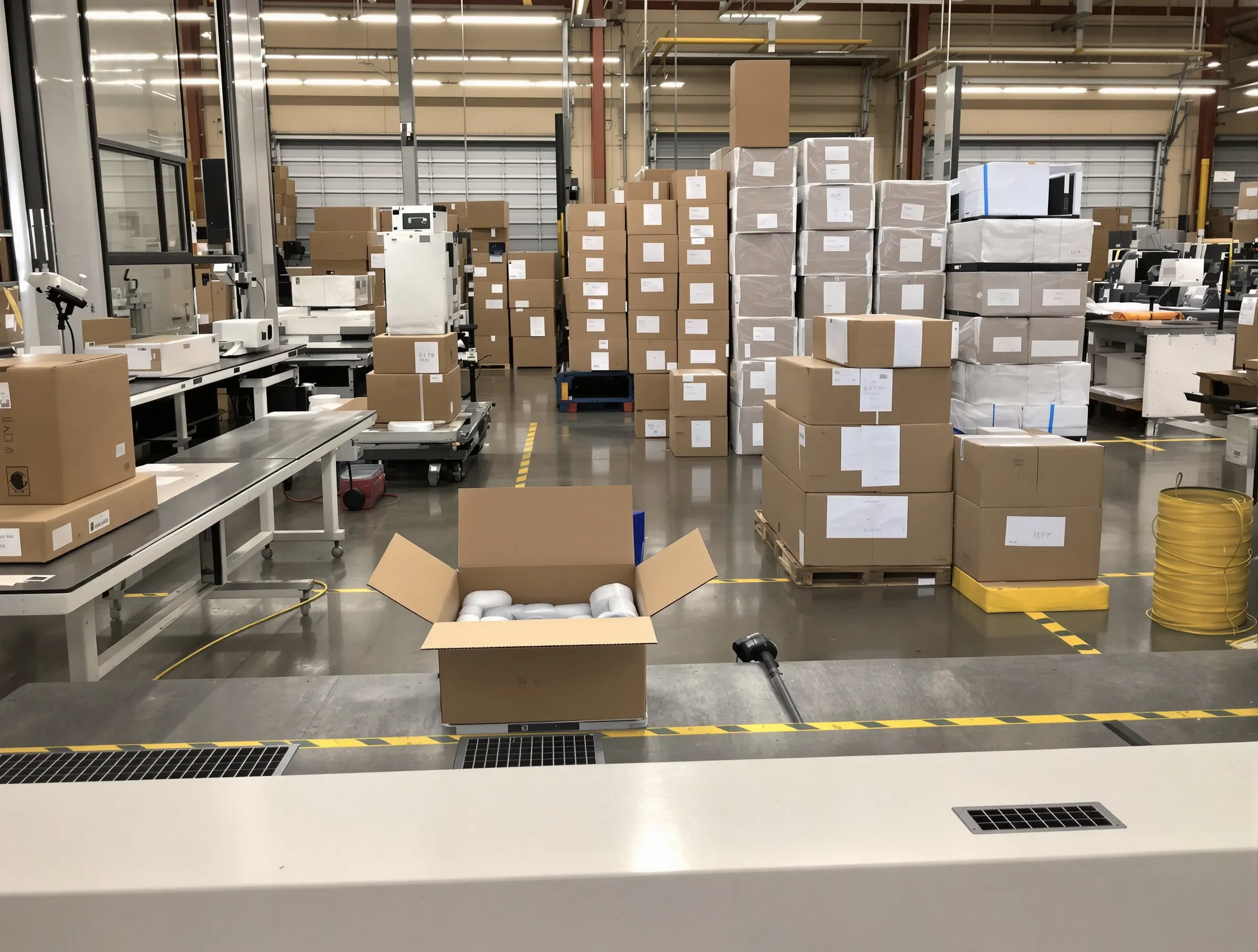
Packed and labelled outbound cartons staged on a depot shipping floor
WHAT PRIME CONTRACTOR MEANS IN PRACTICE

One contract

You sign with Microland. Partner delivery sits behind that agreement rather than beside it, so there is no second master services agreement to negotiate, review, or renew.

One place to raise a ticket

Sites, units, and orders come to us through the portal, the REST API, or email. We route the work to wherever it gets done. You are never the router.

One data view

Onsite calls, depot repairs, refurbishment, and disposition roll into one program view, so work that spans partners still reconciles as one set of numbers instead of three.

One company accountable

The SLA is ours. When a response window slips or a unit stalls, there is no triangle of vendors pointing at each other. There is us.

02

The network

FIELD SERVICES · CANADA

A coast-to-coast Canadian field services partner

A national field services organization that puts technicians on customer sites from coast to coast, working in English and French, so hardware that can’t ship still gets serviced.

WHAT THEY DO
  • Installs, moves, adds, changes and de-installs at customer sites
  • Break-fix dispatch against agreed response windows
  • Deskside support, smart hands, and cabling work
  • Multi-site rollouts, refreshes, and device recovery waves
  • Preventative maintenance visits and physical asset audits
  • Service in English and French, including Quebec sites served in French
WHY IT’S IN THE NETWORK

It closes the one real gap in a depot-only model. Programs on installed hardware (POS lanes, mounted displays, kiosks, back-office racks) need someone at the site, and programs on shippable hardware need a depot. Run separately, those are two vendors and a coordination problem. Run through us, it is one program: the site visit and the board repair share a ticket.

Field services in Canada
DEPOT & FIELD · UNITED STATES

A US partner covering depot and field

A long-established American service organization running depot repair and onsite service across the United States, so a Canadian program can extend south without a second procurement exercise.

WHAT THEY DO
  • Depot repair and returns processing at US facilities
  • Onsite repair and unit-swap dispatch across the United States
  • Advance exchange and replacement-unit programs
  • Retail channel returns, refurbishment, and fulfilment
  • Level 1 and level 2 customer and technical support
WHY IT’S IN THE NETWORK

Brands rarely have a Canada-only problem. They have a North American installed base, and Canada is the part their US provider handles worst: border days, brokerage, tariff exposure, and units leaving the country to be fixed. This pairing answers the whole map. Canadian volume stays in Canada at our depot, US volume is handled in the US, and the program is scoped and reported as one.

RESALE CHANNEL · CANADA

Skadi Electronics

A Canada-only, refurbished-only direct-to-consumer store, and the endpoint that turns recovered hardware back into revenue instead of storage cost.

WHAT THEY DO
  • Direct-to-consumer sales of refurbished and B-stock product
  • Canada-only distribution, kept clear of A-stock channels
  • Refurbished-only positioning, so listings never compete as new
  • An outlet for graded refurbished stock that would otherwise move as bulk liquidation
WHY IT’S IN THE NETWORK

Value recovery only counts when something is actually sold. Screening, repair, refurbishment, and grading produce sellable units; Skadi is where they sell, in a channel narrow enough that it doesn’t undercut your new-product pricing or confuse your distributors. It is the reason our reverse logistics pipeline ends in a sale rather than a pallet.

skadi.ca
03

Questions we get about the network

Are these subcontractors, or referrals to other companies?

Subcontracted delivery under our contract, not referrals. Microland is the prime contractor: you contract with us, the SLA is ours, the invoice is ours, and the work is scoped, dispatched, managed, and reported by us. We are not making an introduction and stepping out of the room.

Can one program cover both Canada and the United States?

Yes. That is what the US partnership exists for. Canadian units are handled at our Markham depot and Canadian sites by our field network; US depot and field work is delivered by our US partner. You scope it once with us, and the reporting comes back as one program rather than two country files you reconcile yourself.

Who holds the SLA when a partner does the work?

Microland. Response windows, turnaround commitments, and escalation paths are agreed with us and owed to you by us, regardless of which hands do the work. Internally we hold our partners to the commitments we have made to you; externally, that is our problem to manage, not yours.

Does adding partners slow anything down or add handoffs for us?

It removes handoffs from your side and absorbs them onto ours. Today, a company running onsite work with one vendor and depot repair with another owns every handoff between them: two intakes, two ticket formats, two reports, and an argument whenever a unit crosses the line. Here you have a single intake, and units move between site, depot, refurbishment, and disposition without leaving our system.

One program, onsite and in the depot. Let’s scope it.