Reverse logistics and returns processing in Canada: recover the most from what comes back.
Returns receiving, triage, testing, refurbishment, grading, resale, and end-of-life recovery: a single Canadian pipeline that turns return streams and B-stock into value instead of write-offs.
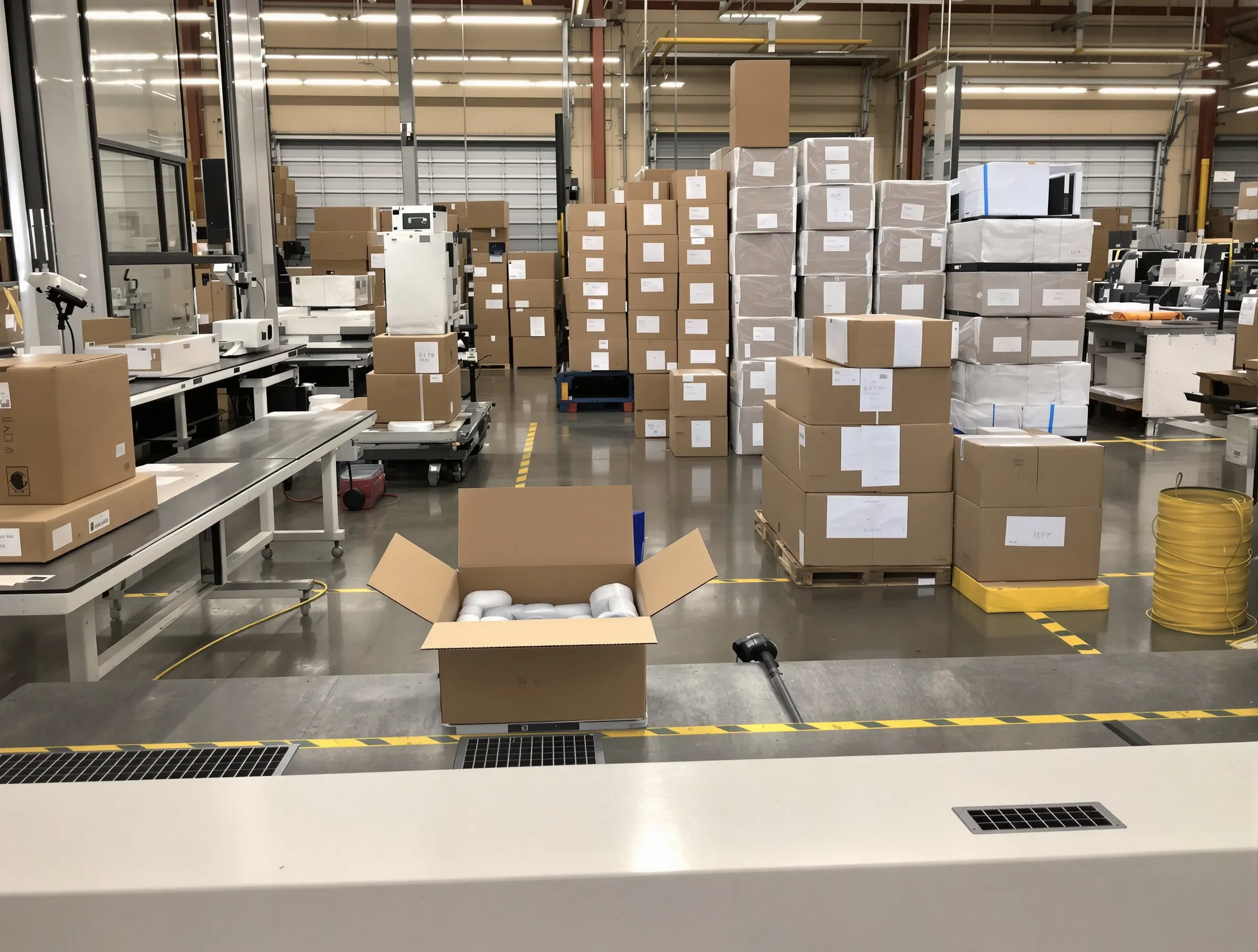
THE JOBProcess what comes back and recover the most value from it.
What reverse logistics services cover
Reverse logistics services in Canada cover everything that happens to a product after it comes back: returns receiving and RMA intake, triage and testing, repair and refurbishment, grading, repackaging, resale, parts harvesting, and recycling. Microland runs all of it from one depot in Markham, Ontario, for OEMs, distributors, and retailers, with every unit tracked by serial number in a customer portal.
From return stream to recovered value.
Everything that comes back funnels through one triage point, then routes to its highest-value exit. You set the rules, and every unit is visible in the portal.
What's included
Returns receiving & triage
Every inbound unit is received, identified, and routed by rule (restock, refurb, repair, harvest, or recycle) with full traceability.
Testing & screening
Functional testing and screening that separates no-fault-found units from real failures before anyone spends repair dollars on them.
Explore 03Refurbishment & grading
Cosmetic and functional refurbishment with consistent, AI-assisted grading, so recovered stock is sellable, not just “working.”
ExploreRepackaging & kitting
Retail-ready repack, accessory kitting, and relabeling so refurbished units can re-enter the channel of your choice.
Resale channel
A Canada-only, refurbished-only direct channel that recovers value while keeping your A-stock pricing and retail relationships clean.
Value recovery & recycling
Component harvesting, disposition with data sanitization following NIST SP 800-88 guidelines, and responsible recycling for the true end of the line.
ExploreHow a returns program runs here.
What happens to a returned unit at the Markham depot, from the first scan to its final disposition, and what you control along the way.
Returns receiving and RMA intake
Returns reach the Markham, Ontario depot from anywhere in Canada, as bulk pallet shipments or as individual units. Each one is checked against your manifest or RMA records, and every serial number enters the system individually, visible in the customer portal from the first scan. The reported reason for return travels with the unit, so the technician testing it knows what your customer said was wrong.
RMAs and orders can be entered in the portal, or submitted from your own systems through our REST API, so nobody on your team retypes a return into a second system. From that first scan the unit has a record, and every later step, from test result to final disposition, is added to the same serial. That record is what makes per-unit reporting possible at the end of the line.
Triage, testing, and no-fault-found screening
Every return stream mixes real failures with units that work fine: returned for buyer’s remorse, a setup problem, or a misdiagnosis. Treat them all as broken and working units eat repair labour they never needed while real failures wait in the same queue. Screening sorts the stream first.
Each unit is functionally tested against criteria defined with you per program and per product: power, functions, ports, displays, connectivity. A pass means what you say it means. Units with no fault found go back to sellable stock or restock. Confirmed failures are documented with symptoms and test results, then routed by your rules. Every unit also gets a cosmetic and functional grade against your grading scale, and that grade drives the refurbish-versus-resell decision downstream. More on how the sort works on the screening and testing page.
Disposition rules you control
Every unit that clears triage takes one of five routes: restock as-is, refurbish, repair, harvest for parts, or recycle. You decide which, and you manage the rules yourself in the customer portal, not through an account manager.
That matters because the right answer moves. Memory prices and tariffs change what refurbished units sell for, what repairs cost, and what harvested parts are worth. A rule that was right last quarter can be wrong today, and a rule locked in a statement of work keeps routing units the old way until the amendment lands. Here:
- Criteria set by model or by category, such as a repair ceiling or which paths a model may take.
- Changes go live immediately: the next unit at triage follows the new rule.
- An AI-assisted disposition recommendation on every unit, with your team making the final call, case by case.
- Every decision recorded by serial, so you can see whether a rule change paid off.
Repair depth behind the returns line
A sort-only returns line tests, grades, and passes along whatever powers on. Anything with a real fault gets scrapped or dropped into a lower grade. Here, units that fail screening flow into the same repair operation that handles our warranty programs, and that bench works down to the component.
That means board-level and BGA repair: fault isolation to the failing component, SMD rework and microsoldering under magnification, and BGA reballing and replacement. You set the repair-versus-scrap threshold, so repairs happen only where they’re economic. Repaired units move into refurbishment: cosmetic restoration, data sanitization where the device stores data, AI-assisted grading against your grade definitions, and repackaging or kitting for the channel. The result is more units recovered per pallet and fewer written off.
Resale without channel conflict
Recovered stock only returns money if it has somewhere to sell that doesn’t hurt your new-product business. Units you route to resale sell through Skadi Electronics, Microland’s partner channel: a Canada-only, refurbished-only direct-to-consumer store that sells nothing new.
Your refurbished product never sits beside its brand-new twin at a discount, and Canadian returns stay in the Canadian market instead of leaking into other regions’ pricing. Every unit is graded and warrantied at Microland before it lists, price floors are set with the brand, and every serial is tracked from return intake to final sale. You decide what’s eligible. For the evidence on cannibalization and the controls that keep the tiers apart, read how to sell refurbished without cannibalizing new sales.
Speed is a recovery metric
Electronics lose value on a calendar. A returned unit that waits for triage, repair, or listing is worth less when it finally sells, and it ties up working capital the whole time. The number worth tracking is the days from customer return to revenue recovery: from the moment a unit leaves your customer’s hands to the moment it earns money again, through resale, redeployment as service stock, or parts.
Processing in-country shortens it. Returns consolidate to the Markham depot from across Canada, so the return leg has no cross-border freight, customs brokerage, or duties, and none of the transit days that come with them. Screening, repair, refurbishment, and resale run under one roof, so there are no handoffs between vendors. We make the case for this metric in the reverse logistics KPI brands are still ignoring.
A reverse logistics partner in Canada for US brands
US OEMs, distributors, and retailers selling into Canada usually find the problem after their first returns season. Canadian returns routed to a US depot cross the border on the way south, and again if anything is resold or redeployed back into Canada, and every crossing adds freight, brokerage, transit days, and, since the 2025 tariff rounds, exposure to duties on movements that used to be routine. A reverse logistics provider in Canada closes that loop. Returns from every province consolidate to the Markham, Ontario depot, get screened, repaired, refurbished, resold, or recycled here, and never leave the country: no re-export leg, no brokerage on the return, no duties.
That is the arrangement most US brands are looking for when they compare reverse logistics companies in Canada: one Canadian receiving point for RMAs and retailer returns, disposition rules they control from their own desk, a Canada-only refurbished resale channel that keeps recovered units out of their US pricing, and per-serial reporting through the portal or the REST API so the Canadian program feeds the same systems as the US one. Programs onboard with a manifest and a rule set, not a facility build-out, and the transition playbook covers moving an existing program north without a coverage gap.
Reporting, data, and end of life
Every serial carries its full history: intake, test outcome, grade, routing, and final disposition. It’s available in the customer portal and through our REST API, so it can feed your own returns systems instead of living in a spreadsheet. Screening outcomes roll up into per-program reporting on failure rates, no-fault-found rates, and grade distribution: the data that tells you what your return stream is actually made of.
Devices that arrive holding user data are flagged at screening and routed for data sanitization following NIST SP 800-88 guidelines before any resale path, with per-unit records in your reporting. Whatever can’t be economically recovered goes to secure destruction and responsible recycling, with chain-of-custody documentation, so the tail end of your return stream runs in the same pipeline as the front end. See IT asset disposition for how that tail is handled.
Which path should a failed return take?
The returns disposition guide includes a calculator that prices refurbish, resell as-is, harvest, and recycle for a single unit using your own numbers, and shows how far memory prices or tariffs have to move before the answer changes.
Built for owners of return streams
- OEMs with RMA volume and no Canadian processing point
- Distributors sitting on B-stock and open-box inventory
- Retailers whose returns pile up faster than they get dispositioned
- Brands with sustainability or circularity commitments that returns keep undermining
Common starting points
- Returns are accumulating in a 3PL that can only store them, not process them.
- B-stock is sitting on the books because there’s no clean channel to move it.
- Channel-cleanliness concerns: refurbished units leaking into A-stock channels at uncontrolled prices.
- A circularity or waste-reduction mandate arrived, and scrapping returns just became a reportable problem.
- End-of-life inventory needs value recovery, not just disposal.
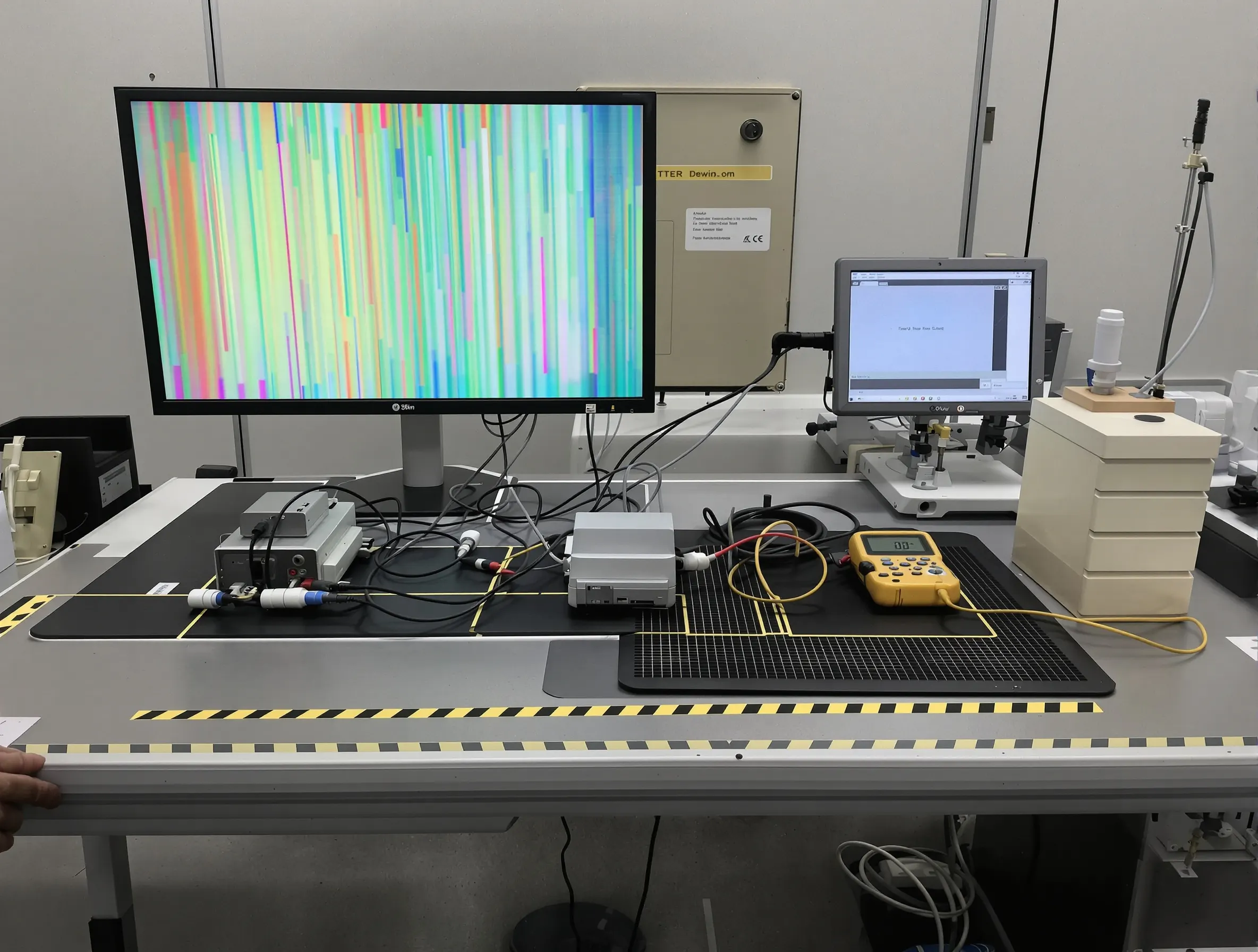
Questions we get
What reverse logistics services does Microland provide in Canada?
Returns receiving and RMA intake, functional testing and no-fault-found screening, repair down to the board level, refurbishment with AI-assisted grading, repackaging and kitting, resale through a Canada-only refurbished channel, parts harvesting, data sanitization following NIST SP 800-88 guidelines, and recycling. All of it runs from one depot in Markham, Ontario, for OEMs, distributors, and retailers across Canada, with every unit tracked by serial in the customer portal.
What happens to a unit after we send you a return pallet?
Each unit is received against your manifest, identified, and triaged by rules we set together: restock as-is, refurbish, repair, harvest for parts, or recycle. You see the disposition of every unit in the portal, and you can override routing case by case.
Can we set and change our own disposition rules?
Yes. You set disposition criteria by model or by category in the customer portal, and a change is live immediately: the next unit at triage follows the new rule, with no change order or contract amendment. Every unit gets an AI-assisted recommendation, your team makes the final call and can override routing case by case, and every decision is recorded by serial.
How does resale work without damaging our retail channel?
Recovered units sell through a Canada-only, refurbished-only channel: clearly graded, clearly refurbished, never mixed with new stock. You recover value while your A-stock pricing and retail relationships stay clean. You control what’s eligible.
Can you repair returns instead of just grading them?
Yes. That’s the difference between a returns processor and a repair depot running returns. Units that fail screening flow into the same repair operation that handles our warranty programs, down to component-level rework. More units recovered, fewer written off.
We have no Canadian facility. Can you be our returns processing point in Canada?
Yes. That’s a common starting point for OEMs and distributors selling into Canada from elsewhere. Return streams consolidate to our Markham, Ontario depot from anywhere in the country, so returns get screened, repaired, refurbished, resold, or recycled without ever leaving Canada. The return leg carries no cross-border shipping, brokerage, or duties, and you see every unit in the portal.
Are you a reverse logistics partner in Canada for US companies?
Yes. US OEMs, distributors, and retailers use Microland as their reverse logistics partner in Canada: one receiving point in Markham, Ontario for RMAs and retailer returns from every province, with screening, repair, refurbishment, resale, and recycling all done here. Canadian returns stay in Canada, so there is no re-export leg, no brokerage on the return, and no duty exposure on the way back. You set the disposition rules and see every serial in the portal or through the REST API.
How should we compare reverse logistics companies in Canada?
Ask four things. Does the provider repair, or only grade? A returns processor writes off what a repair depot recovers. Are disposition rules yours to change without a change order? Is resale kept in a Canada-only refurbished channel, away from your new-unit pricing? And do you get per-serial data through a portal and an API, not a monthly spreadsheet? Microland is a reverse logistics provider in Canada that does all four from one depot in Markham, Ontario.
What about data on returned devices?
Devices that store data are sanitized following NIST SP 800-88 media-sanitization guidelines before refurbishment or resale, with per-unit records available in your reporting.
Do you handle recycling and end-of-life?
Yes. Whatever can’t be economically recovered is responsibly recycled, with chain-of-custody documentation, so the tail end of your return stream is handled in the same pipeline as the valuable front end.