Notes from the depot floor.
How repair, returns, and lifecycle programs actually work in Canada, written by the people running them, not a content agency.
Insights
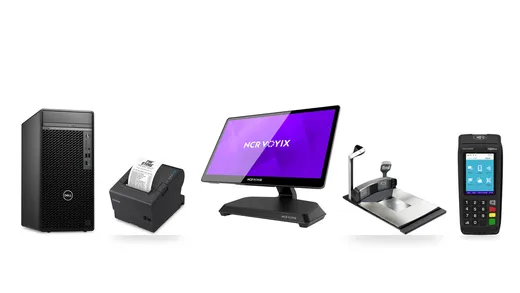
How to Choose a Point-of-Sale Repair Partner in Canada
The evaluation criteria that actually separate POS repair partners: end-of-life parts sourcing, whole-estate coverage, multi-vertical depth, and economics that survive high-volume, low-per-model fleets.
Read
How to Sell Refurbished Without Cannibalizing New Sales
Cannibalization fear kills refurbished programs before they start. The research says the fear is oversized, and five controls turn refurb into a segment play instead of a discount race.
Read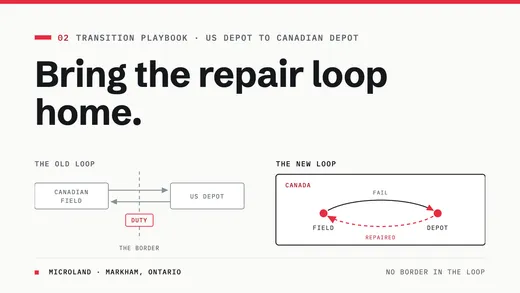
How to Move a Canadian Repair Program From a US Depot: A Transition Playbook
Moving Canadian repair volumes out of a US depot? A step-by-step transition playbook: inventory audit, RMA cutover, SLA continuity, customs, and a timeline.
Read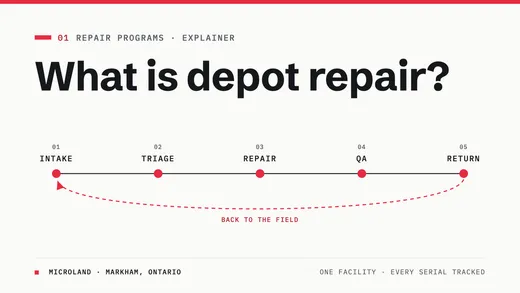
What Is Depot Repair? How It Works, Costs, and When to Use It
Depot repair explained: the centralized mail-in repair model, the five-step process, what actually drives cost per unit, and when it beats field service.
Read
The AI Compute Shortage Is a Repair Problem in Disguise
GPUs are failing faster than the aftermarket can fix them. Why repair capacity, not silicon, is the overlooked constraint in the AI compute shortage.
Read
Why Every OEM Selling Into Canada Needs a Certified Refurbished Program Right Now
Memory prices, tariffs, and cost-first CIOs are pushing Canadian buyers to refurbished. OEMs without a certified refurbished program are losing that revenue.
Read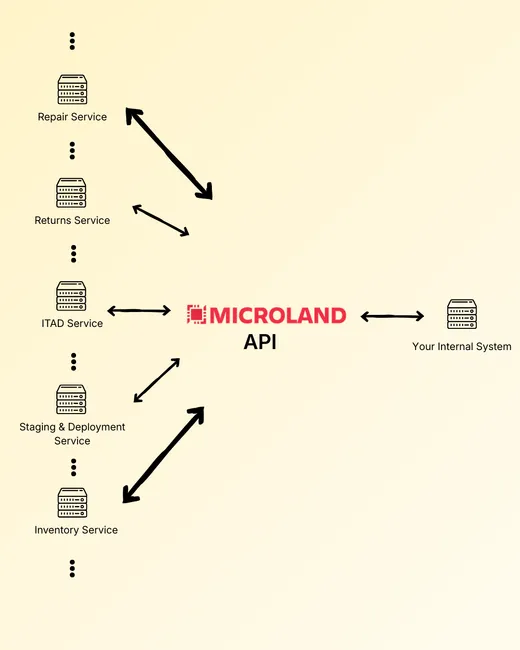
Why Depot Repair and Returns Programs Break at Scale Without API Integration
Manual status requests and reconciliation spreadsheets don't scale. What real API integration with a depot repair partner should look like.
Read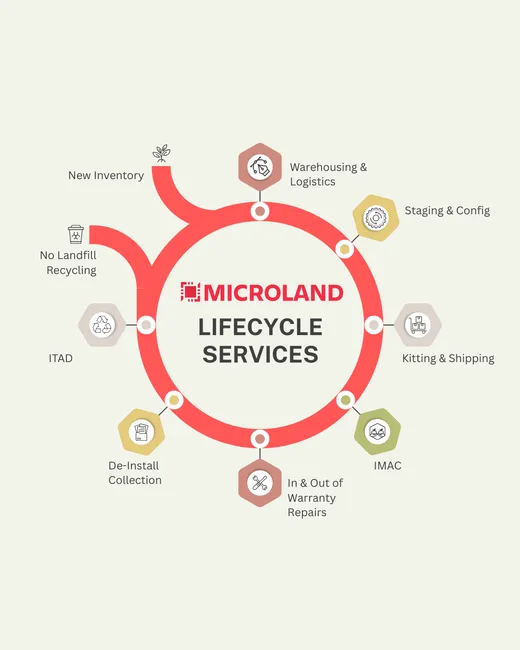
Your Behind-the-Scenes Partner for IT Lifecycle Services in Canada
How solution providers deliver full lifecycle coverage in Canada without building a depot: Microland executes the programs you've already sold.
Read
Windows 10 End of Life: What It Means and What To Do About It
Windows 10 support has ended. What Canadian businesses risk by waiting, and how refurbishment, ITAD, and staggered refresh turn EOL into a win.
Read
Québec Bill 29 Repairability Disclosure: What OEMs and Retailers Must Do
Québec's Bill 29 requires repairability disclosure at the point of sale. Here's what OEMs and retailers must do, and why it affects all of Canada.
Read
What the Refurbished Electronics Market's 12% Annual Growth Means for Canadian Operations
The global refurbished electronics market is projected to grow from USD 129.7B in 2025 to USD 357.8B by 2034. What that means for Canadian programs.
Read
Beyond Circularity: The Reverse-Logistics KPI Brands Are Still Ignoring
Circular design isn't enough. Speed decides how much value a return retains. Meet Asset-Velocity: days from customer return to revenue recovery.
Read
The Impact of Trump's 2025 Tariffs on Reverse Logistics in Canada
The 2025 U.S. tariffs make routing Canadian repair, refurbishment, and staging through U.S. depots punishingly expensive. Here's the math and the fix.
Read
AI Device Grading: The New Standard
How Microland uses AI-driven cosmetic grading to assess returned devices faster, more consistently, and at lower cost than manual inspection.
Read
Returns Are Your Secret Parts Supply Chain
Returned products are a ready-made source of repair parts: cheaper, faster, and better matched to demand than factory orders. Here's how harvesting works.
Read
Tariffs Are Here: Reasons to Optimize and Update Your Canadian Service Approach
Proposed U.S. tariffs on Chinese, Canadian, and Mexican goods add hidden costs to cross-border service. Why keeping repair in Canada protects your margins.
Read
7 Reasons to Opt for an Independent Staging Partner Over Large Distributors
Why an independent, product-agnostic staging and configuration partner beats a large distributor when deployments and schedules change fast.
Read
Online Returns Fraud in Canada: Its Cost and Solutions
Returns fraud is organized, growing, and expensive for Canadian retailers. How the schemes work and the practical defenses that catch them.
Read
Canadian Right to Repair: Where the Law Stands
A status report on Canada's Right to Repair movement: Bill C-244, Québec's Bill 29, and the manufacturer obligations a federal framework would bring.
Read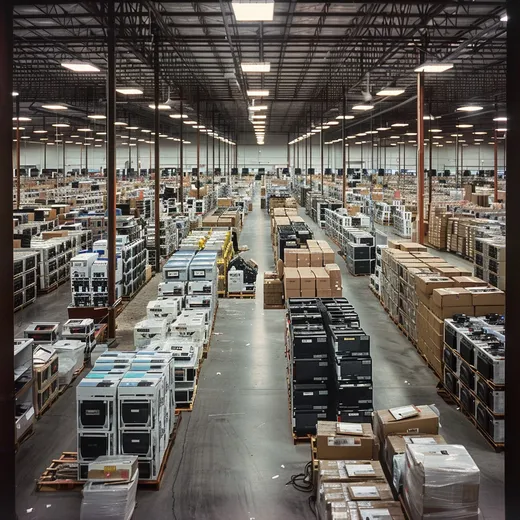
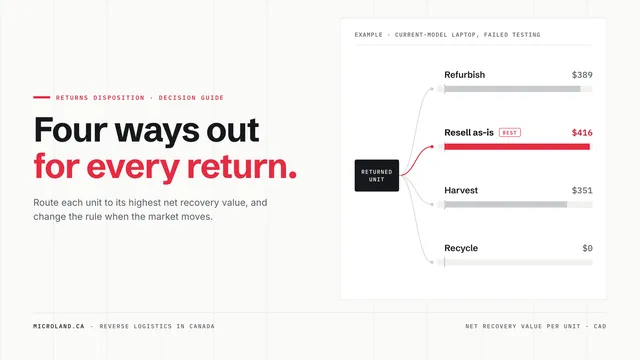
Innovative Returns Management Strategies for Sustainable Manufacturing
Three returns management strategies manufacturers use to recover value sustainably: service-stock refurbishment, B-stock resale, and refurbishment partners.
Read
How Returns Work: The Reverse Logistics Process Explained
What actually happens after a customer returns a product? A step-by-step look at reverse logistics: receiving, triage, refurbishment, and resale.
Read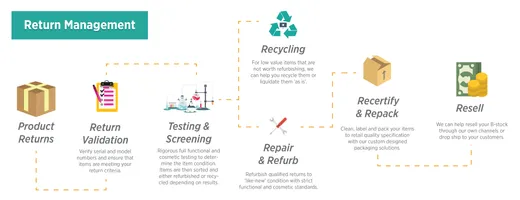
Liquidation vs. Refurbishment: What's Best for Your Returns?
Liquidation or refurbishment for returned electronics? Compare recovery economics, channel cleanliness, and brand control, and learn when each wins.
Read
Why In-Country Service Matters in Canada
The case for a Canadian service centre: happier channel partners, faster turnaround, lower landed costs, and none of the cross-border friction.
ReadNews
- Microland Is an Authorized Rotel and Monitor Audio Service Centre in Canada
- Microland Is the Authorized QSC and Q-SYS Service Provider in Canada
- Microland Joins the Professional Audio Visual Society of Canada (PAVSC)
- Microland Is an Authorized Yamaha Service Center
- New Headband Repair Program for Sony WH-1000XM4 and WH-1000XM5 Headphones
- Microland Partners with Cambridge Audio
- Microland Expands List of Authorized Servicer Brands
- Denon & Marantz 8K HDMI Upgrade
- Microland Is Now an Onkyo & Pioneer Authorized Service Center
- Microland Is Now a Sony Authorized Service Center