How to Choose a Point-of-Sale Repair Partner in Canada
The evaluation criteria that actually separate POS repair partners: end-of-life parts sourcing, whole-estate coverage, multi-vertical depth, and economics that survive high-volume, low-per-model fleets.
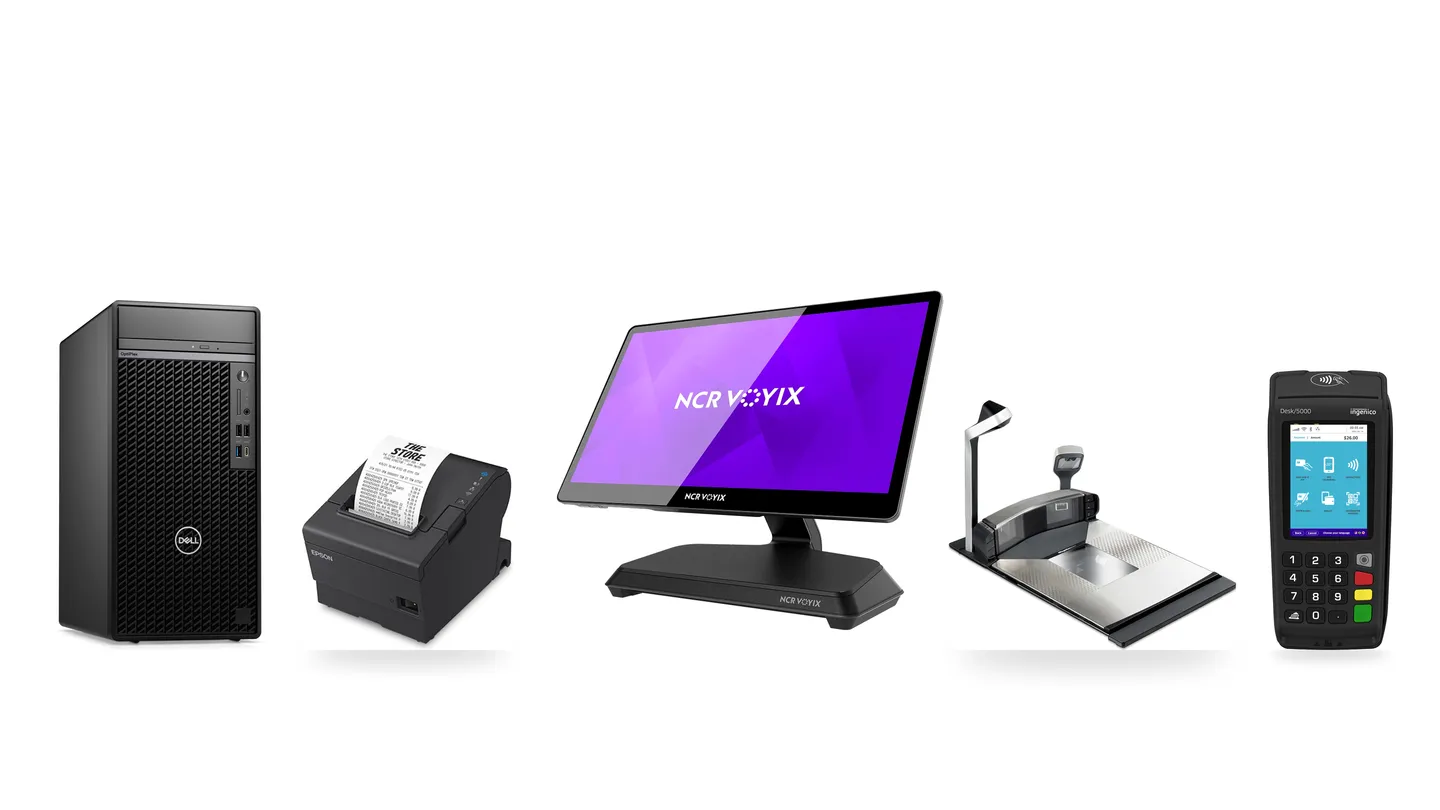
A point-of-sale repair partner should be evaluated on five capabilities: parts sourcing for discontinued equipment, coverage of the full store estate rather than just the terminal, repair depth across multiple hardware verticals, tolerance for fleets that drift from site to site, and an operating model that stays viable when total volume is high but per-model volume is very low. Most providers are strong on one or two of these. POS programs usually fail on the criteria nobody thought to ask about.
This guide walks through each one, with the questions to ask and the red flags to watch for, from the perspective of a Canadian depot that has been repairing this class of equipment since 1994.
Why POS fleets are harder to support than they look
Point-of-sale hardware refuses to die on schedule. Walk the estate of any established retail or food-service operator and you will find receipt printers that were discontinued years ago, back office PCs well past their planned life, back office printers nobody remembers buying, and barcode scanners whose manufacturer no longer sells a single spare part. All of it is still under active maintenance contracts, because all of it still rings sales.
That is rational, not negligent. Replacing an estate across hundreds of sites is capital-intensive and operationally disruptive, so refresh cycles stretch and the same hardware comes back to the bench year after year. The consequence for sourcing decisions: a service provider tuned to current-generation product, with parts ordered from an OEM price list and a standardized bench process, will struggle with what a real POS fleet actually sends them. The criteria below follow directly from that reality.
1. Parts sourcing for discontinued and end-of-life hardware
This is the single most decisive capability. Once the OEM parts channel dries up, depot repair only works if the partner can keep unit economics intact while sourcing parts one piece at a time.
Strong part sourcing for legacy POS equipment looks like this:
- Harvesting: serviceable components recovered, tested, and inventoried from return and end-of-life streams, so yesterday’s pulls become tomorrow’s parts supply
- Donor units: retired devices from de-installed estates held as structured parts stock rather than scrapped
- Secondary-market sourcing: the patience and supplier network to find a print head, power supply, or scan engine in single-unit quantities
- Board-level repair: component-level rework that rebuilds assemblies which cannot be purchased at any price
The red flag is a partner who quotes only against available part numbers and declares a unit beyond economical repair whenever the shelf is empty. On a legacy fleet, that policy quietly converts your maintenance contract into a disposal service.
2. Coverage of the whole store, not just the terminal
A point-of-sale estate is much more than terminals and receipt printers. The equipment that keeps a store or restaurant transacting includes:
- Terminals and all-in-one registers
- PIN pads and payment devices
- Receipt and label printers
- Barcode scanners and imagers
- Cash drawers and customer displays
- Self-checkout components
- Back office PCs and servers
- Back office printers
- In quick-service restaurants: kitchen display systems, bump bars, timers, and drive-through communication equipment
When the repair partner covers only the payment-adjacent devices, everything else fragments into separate vendors, separate RMA processes, and separate freight. The operational goal is one intake, one triage, one pipeline for the whole estate. Ask for the list of device classes the partner will actually accept, and compare it against what your sites really contain.
3. Depth in more than one vertical
Look closely at that equipment list and a pattern appears: half of it is not point-of-sale product at all. The back office PC is a PC hardware repair job. The back office printer belongs to print and imaging. Rugged handheld scanners are enterprise mobility devices. Drive-through headsets and base stations are audio equipment.
A provider that works strictly in point of sale has two options for those devices: decline them, or learn on your fleet. A partner with established bench depth across PC hardware, print and imaging, enterprise mobility, and AV, alongside POS itself, covers the entire estate under one roof with processes that already exist. This is the criterion competitors talk about least, and it is the one that determines whether “full estate coverage” is a capability or a brochure claim.
4. Room for non-standard equipment and fleet drift
Large franchise networks make this criterion unavoidable. Sites are built and refitted in different years, franchisees make local purchasing decisions, and acquisitions bring whole estates of unfamiliar equipment. Two locations under the same banner can run different terminal generations, different scanner brands, and different printer models, and the gap widens every year the fleet ages.
A repair partner built for single-SKU production runs will choke on this. What the work actually requires is a per-unit operating discipline: serialized intake, model-level triage, repair documentation maintained per device family rather than per contract, and technicians comfortable seeing a model for the first time. Ask a prospective partner how many distinct models moved through their bench last year. The shape of that answer tells you whether variability is their normal or their exception.
5. Economics that survive high volume, low per-model volume
POS programs have a volume paradox: the program is large, but no single model is. Thousands of units a year can spread across dozens of device families, some of which appear a handful of times. Each of those low-runners still needs parts sourced individually, documentation, and test fixtures.
Providers priced around per-SKU setup and minimum batch volumes make the long tail uneconomic, and the long tail is most of a POS fleet. Ask how the partner quotes a mixed estate: a flat program structure that absorbs model diversity is the signal you want. Ask, too, how they stay profitable sourcing parts one piece at a time, because if they cannot answer that, the losses eventually surface as declined repairs.
The quick evaluation table
| Criterion | What to ask | Red flag |
|---|---|---|
| EOL parts sourcing | ”How do you source parts for discontinued models?” | BER verdict whenever a part is out of stock |
| Whole-estate coverage | ”Which device classes will you accept?” | Terminals and printers only |
| Multi-vertical depth | ”What do you do with our back office PCs and printers?” | Subcontracting or declining non-POS devices |
| Fleet drift tolerance | ”How many distinct models crossed your bench last year?” | Volume minimums per model |
| Long-tail economics | ”How do you price a mixed, aging estate?” | Per-SKU setup fees |
| Canadian footprint | ”Where does the repair physically happen?” | Every unit crosses the border twice |
| Program logistics | ”Can you run exchange pools, staging, and disposition?” | Repair bench with no logistics wrapper |
Beyond the bench: what rounds out a program
Repair capability is necessary but not sufficient. The strongest POS programs also include:
- An in-country depot. For Canadian fleets, in-country service removes customs brokerage, border delays, and tariff exposure from every repair loop. If your program currently runs through a US depot, the transition playbook covers what moving it involves.
- Advance exchange. Buffer pools that put a working device on site before the failed one ships, keeping lanes open while the repair happens in the background.
- Staging and deployment. Imaging, configuration, and kitting for refits and new-store openings, so hardware arrives ready to scan.
- Disposition. When part of the estate finally does retire, de-installed equipment becomes either harvested parts supply or responsibly processed material, not a landfill line item.
- Systems integration. At fleet scale, a repair program without portal and API connectivity breaks down operationally. Status, serial history, and RMA creation should flow into your systems, not live in email.
Where Microland stands
We built our depot around exactly this profile of work. Microland has operated from Markham, Ontario since 1994, serving all of Canada, with onsite field service delivered coast-to-coast through our national partner network. We service point-of-sale equipment from platforms including Oracle MICROS, NCR, Ingenico, Elo, and Toshiba, and we repair the rest of the estate too, because PC hardware, print and imaging, enterprise mobility, and AV are established verticals on our bench, not favours.
Parts harvesting, board-level component repair, advance exchange pools, staging, and disposition all run under one roof, connected to your systems by portal and API. The aging, drifting, one-of-everything fleet that generalist providers price out is the work we structured the repair and warranty practice to handle.
If you are evaluating POS service partners for a Canadian fleet, put us on the shortlist and ask us the hard questions above. Get in touch and we will walk you through how your estate would actually flow through the depot.
Frequently asked questions
Who are the top point-of-sale repair companies in Canada?
Canada's POS repair market includes OEM-run service depots, large logistics providers with repair operations, and independent depot specialists. Rather than starting from a name list, shortlist providers against five criteria: end-of-life parts sourcing, coverage of the full store estate, multi-vertical repair depth, tolerance for mixed and drifting fleets, and pricing that stays workable at low per-model volume. Microland Technical Services, an independent depot operating in Markham, Ontario since 1994, serves all of Canada and is built specifically around those capabilities.
Can discontinued POS equipment still be repaired?
Yes. Discontinued terminals, receipt printers, and barcode scanners can usually be kept in service through parts harvested from retired units, secondary-market sourcing, and board-level component repair that rebuilds assemblies the manufacturer no longer sells. The limiting factor is the repair partner's parts-sourcing network, not the age of the hardware.
What equipment should a POS repair program cover?
A complete program covers terminals and all-in-one registers, PIN pads and payment devices, receipt and label printers, barcode scanners, cash drawers, customer displays, and self-checkout components, plus the back office PCs, servers, and printers that run the store. In quick-service restaurants it should extend to kitchen display systems, bump bars, and drive-through communication equipment.
Should a Canadian POS fleet be repaired in Canada or shipped to a US depot?
An in-country depot avoids customs brokerage, cross-border shipping delays, and tariff exposure on every repair loop. A device repaired in the US crosses the border twice per incident, and both crossings carry cost and delay risk. For fleets operating in Canada, a Canadian depot typically shortens turnaround and removes an entire category of landed-cost risk.
Does Microland repair POS equipment from major manufacturers?
Microland services point-of-sale equipment from platforms including Oracle MICROS, NCR, Ingenico, Elo, and Toshiba, along with the receipt printers, barcode scanners, and peripherals that surround them. Programs cover both in-warranty and out-of-warranty repair, run from its Canadian depot in Markham, Ontario.